
NMLink is a simple orchestration engine that connects, automates, and manages data between NMSaaS and other systems. Best of all, it is fully managed by NMSaaS. We take care of everything.
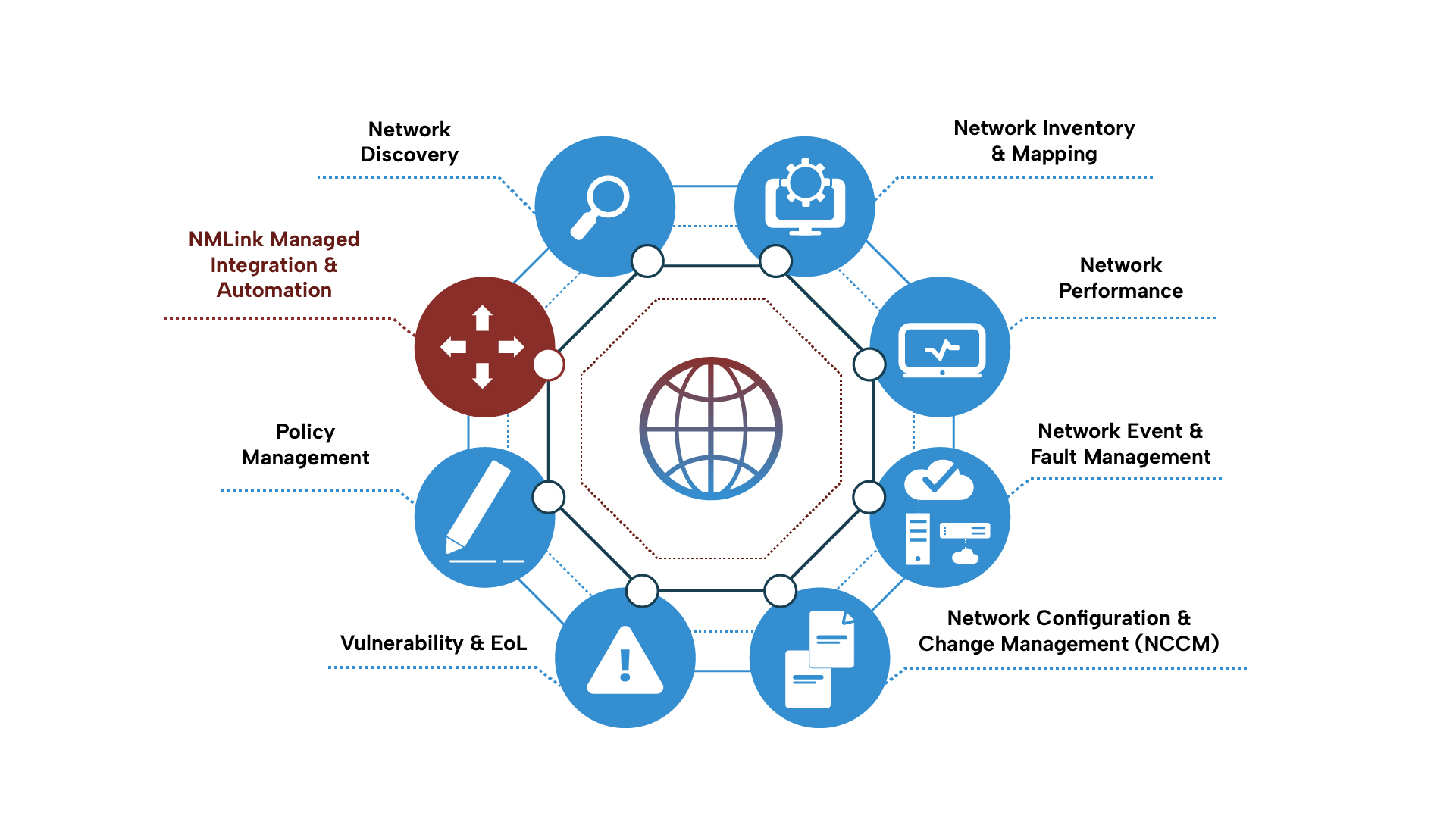
Most network platforms can send an alert or export a file. The hard part is keeping the service desk, the CMDB, monitoring tools, and internal applications in sync without a pile of point-to-point scripts. Those scripts break, they have no owner, and they drift when a field changes. Tickets go out late or with the wrong metadata, and the CMDB does not match what is actually live on the network. Cutting Network Alert Noise makes the same point on the alerting side: a clean, connected workflow matters as much as the original event.
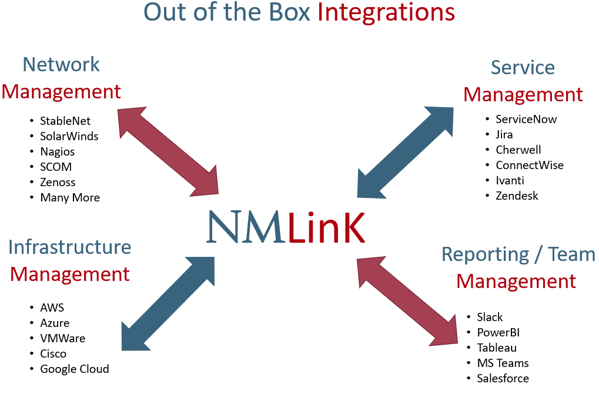
With NMLink you get a fully managed automation service, not a do-it-yourself integration kit. NMLink can create tickets in your existing service desk with the right metadata, sync them bi-directionally, keep the CMDB current from live discovery and inventory, and hook NMSaaS to other network management, BI, and even homegrown applications, without you writing the glue code. You can see what is happening in real time, make changes on the fly, and fix problems without going into code.
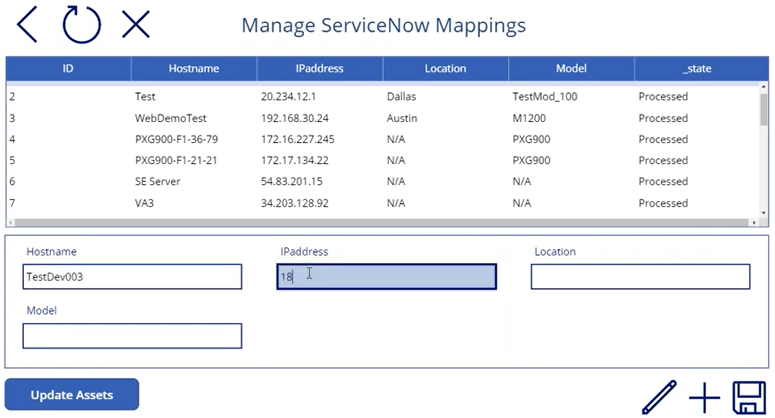
Effortlessly synchronize your service desk process with alerts from NMSaaS or other management systems.
Orchestrate data with your CMDB ensuring a cohesive source of truth for network assets.
All “Links” are based on API access to NMSaaS, service desks, other IT monitoring systems, and even homegrown applications. NMSaaS brings those connections into a managed orchestration engine. The management layer is the product: it is delivered as a managed solution, and you do not need to build anything.
For a longer read, see NMLink: The Future of IT Automation and Data Integration. Service-desk workflows often start from event and fault management.
“The team at NMSaaS made it a turn key set up. They did all the work for us, handed us the keys, and we were good to go.” – Michael B., Director of Application Security
Result: Reduced average time to onboard a new employee or client by up to 90%.
Result: Reduced manual effort that had been required to keep these disparate systems “in synch” within one MSP by over 50%.
Result: Completely eliminated common (human based) errors which had been occurring on a regular basis.